Faith-Based vs Spiritual Recovery
Two Ways Recovery Engages Faith, and How They Differ
Reading time: 7 minutes
“Faith-based” and “spiritual” get used almost interchangeably in addiction treatment marketing, but they describe two different things. One is built around a specific religious tradition. The other is intentionally open-ended. Knowing which one you’re looking at matters before you commit.
In This Guide
In This Series
- Faith-Based vs Spiritual Recovery (you are here)
- 12-Step vs Non-12-Step Recovery
- What Recovery Model Is Right for Me?
- Nature-Based Recovery
- Alternatives to Rehab
Introduction
Recovery programs that mention faith or spirituality aren’t all built the same way. Some are organized around a specific religious tradition, with services, clergy, and doctrine woven into daily structure. Others take a broader, non-denominational approach to meaning and connection that doesn’t require any particular belief at all. The words get used loosely, sometimes interchangeably, in program marketing, which makes it easy to enroll somewhere without understanding what you’re actually signing up for.
This guide compares the two directly: what each one involves in practice, who tends to be better served by each, and the questions worth asking before you commit either way.
What Faith-Based Recovery Involves
Faith-based recovery programs are organized around a specific religious tradition, most commonly Christian in the U.S., though Jewish, Muslim, and other faith-specific programs exist as well. That tradition shapes the program’s understanding of addiction and healing, and its practices typically include prayer, scripture study, worship services, and involvement from clergy or lay ministers alongside (or sometimes instead of) clinical staff.
Some faith-based programs are open to people of any background who are willing to participate in the tradition’s practices. Others are designed specifically for adherents of that faith and assume a shared belief system from the start. Structure varies widely too: many are residential or community-based, built around a congregation or ministry, though outpatient and individual formats exist as well.
One thing worth checking before enrolling: clinical licensure varies enormously across faith-based programs. Some pair licensed clinicians with faith leaders in a genuinely integrated model. Others are peer-led or ministry-led without licensed clinical staff involved at all. Neither is inherently wrong, but they’re very different levels of care, and the label “faith-based” alone doesn’t tell you which one you’re looking at.
What Spiritual, Non-Religious Recovery Involves
Spiritual, non-religious approaches don’t tie recovery to any single doctrine. They tend to draw on broader themes, meaning, purpose, connection to something larger than oneself, whether that’s a community, one’s own values, or the natural world, without requiring belief in a specific deity or theology.
The clearest example is the “higher power” language used in 12-step programs, which is deliberately left open to individual interpretation. For some participants that means a specific god. For others it means a support group, a set of principles, or simply something bigger than their own willpower. Contemplative practices like mindfulness and meditation, often borrowed from various spiritual traditions, are also commonly used in secular, clinical settings without the religious framework attached.
This kind of approach tends to work for people who are agnostic, atheist, “spiritual but not religious,” or who hold a different faith than the one embedded in a given faith-based program, without asking them to set aside or adopt any particular belief system to participate fully.
Key Differences
Who Each Tends to Fit
Faith-based recovery tends to fit people who already hold that faith and want their treatment integrated with their existing religious life and community, rather than kept separate from it. For someone whose faith is central to their identity, having recovery organized around that same tradition can reinforce rather than compete with their support system.
Non-religious spiritual approaches tend to fit people who want room to explore meaning and connection without being asked to adopt a specific set of beliefs, including people who tried a faith-based program and didn’t connect with it, people of a different faith than the one on offer, and people with no religious background who still want more than a purely clinical framework.
How to Choose
Start with your own beliefs, not the program’s marketing. Do you want recovery organized around a specific faith tradition, or do you want that part of your life kept open and self-directed? Both are legitimate starting points.
Then ask providers direct questions: Is participation in specific religious practice required or optional? Is clinical staff licensed, and how does that staff work alongside any faith leaders involved? Can you opt out of religious content and still fully participate? A program that can’t answer these clearly is worth a second look regardless of which label it uses.
It’s also worth considering whether the right fit is a program that doesn’t lead with either faith or spirituality at all, and simply leaves room for you to bring your own beliefs, or lack of them, into individual work on your own terms.
Can You Combine Them?
Yes, and it’s common. Many people maintain their own faith practice or congregation alongside a clinical program, whether that program is explicitly faith-based, secular, or somewhere in between. Individualized programs, including AIR’s one-on-one model, typically let the client decide how much faith or spiritual content, if any, to include, rather than building the curriculum around one framework by default. That flexibility can work well for people who want their own beliefs honored without the treatment itself being organized around a specific doctrine.
Common Misconceptions About Secular vs. Faith-Based Recovery
A common misconception is that faith-based recovery is only for people who were already religious before treatment, and that secular or spiritual-but-not-religious approaches are the only option for everyone else. In practice, some people come to faith through the recovery process itself, and some deeply spiritual people specifically prefer a non-religious framework. Neither path requires a fixed starting point of belief.
Another misconception treats “spiritual, non-religious” as simply “secular with extra steps,” when for many people it’s a distinct and substantial framework in its own right, built around connection to nature, purpose, meaning, and something larger than oneself, without requiring a specific religious doctrine. It’s worth understanding it as its own category rather than a diluted version of either faith-based or purely clinical, secular treatment.
Frequently Asked Questions
Is a faith-based program only for people of that religion?
It depends on the program. Some are open to anyone willing to participate in the tradition’s practices, while others expect or require shared belief. Ask directly before enrolling.
Do I have to be religious to benefit from a 12-step program?
No. The “higher power” concept in 12-step programs is intentionally broad, and many participants define it in secular or personal terms rather than a specific religious belief.
Are faith-based recovery programs clinically licensed?
It varies widely. Some pair licensed clinicians with faith leaders in an integrated model; others are peer-led or ministry-led without licensed clinical staff. Check credentials directly before enrolling.
Can I ask a program to leave out religious content?
Many individualized and clinical programs will accommodate this, but not all will. Ask before enrolling rather than assuming.
Can treatment change or influence my existing religious beliefs?
Ethical treatment programs, faith-based or otherwise, generally aim to support a person’s existing framework rather than impose a new one. If a program’s approach to faith or spirituality doesn’t align with your existing beliefs, or feels like it’s being pushed on you, that’s worth raising directly or considering as a sign the program isn’t the right fit.
Is spiritual, non-religious recovery a real, structured framework, or just an absence of religion?
It’s a real, structured framework in most well-designed programs, built around concepts like meaning, connection, and purpose, often drawing on philosophy or practices like mindfulness and time in nature, rather than simply being religious treatment with the religious content removed.
Key Takeaways
- “Faith-based” and “spiritual” aren’t the same thing: one is tied to a specific religious tradition, the other is intentionally open-ended.
- Check what participation actually requires of you, not just the label a program uses.
- Clinical licensure varies widely among faith-based programs, ask directly rather than assuming.
- Fit and genuine engagement matter more than which framework you choose.
- Combining your own faith practice with clinical treatment, faith-based or secular, is common and often workable.
Conclusion
Whether recovery is grounded in a specific faith tradition or kept intentionally open, what matters most is that it reflects your actual beliefs, not a label on a website. Ask direct questions before committing, and don’t be afraid to look for a program that lets you define what fits.
About the Author
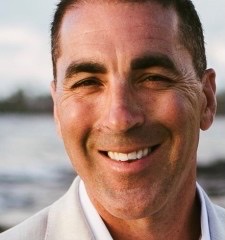
Cassidy Cousens is a certified counselor, interventionist, and founder of Arago Integrative Recovery (AIR). He has more than 25 years of applied behavioral health practice, including two decades as an owner-operator of treatment programs across the continuum of care.
AIR was designed around the understanding that many people benefit from experiencing treatment outside traditional systems, and that one-on-one work, movement, and being in nature create conditions that help people recover, heal, and build the capacity for meaningful and lasting change. Read more about Cassidy’s background.