Experiential Therapy and Outdoor Recovery
Learning Through Action Instead of Just Talking About It
Reading time: 8 minutes
Experiential therapy uses action and direct experience, not just conversation, to support change. Outdoor settings are one of the most common contexts for it. Here’s how the two connect.
In This Guide
- Introduction
- What Experiential Therapy Actually Is
- Common Formats
- Why Outdoor Settings Are So Common
- Who It Tends to Serve Well
- Real Limitations
- Questions to Ask a Provider
- How Experiential Therapy Is Typically Sequenced Within a Program
- Common Misconceptions About Experiential Therapy
- Frequently Asked Questions
- Key Takeaways
- Conclusion
In This Series
- Experiential Therapy and Outdoor Recovery (you are here)
- Nature-Based Recovery
- What Are Recovery Immersives?
- Recovery Coaching vs Rehab
- 12-Step vs Non-12-Step Recovery
Introduction
Talk therapy asks someone to describe a problem in words. Experiential therapy asks them to work through it in action, on a trail, in a challenge, through a hands-on task, and then reflect on what came up. Neither approach replaces the other; many programs use both. Outdoor settings happen to be one of the most natural, and most common, contexts for experiential work.
What Experiential Therapy Actually Is
Experiential therapy is a broad clinical category built around direct experience and active participation rather than discussion alone. A licensed clinician typically facilitates an activity, then guides reflection on what it revealed, about coping patterns, trust, control, or emotional regulation, connecting the experience back to the person’s clinical goals. It’s a structured therapeutic method, not just “doing something outdoorsy.”
Common Formats
- Adventure-based counseling: Structured challenges like ropes courses, climbing, or rafting used to build trust, confidence, and problem-solving under real stress.
- Wilderness expeditions: Extended outdoor trips combining physical challenge, group or individual processing, and distance from daily triggers.
- Equine therapy: Structured work with horses used to build awareness of nonverbal communication, boundaries, and emotional regulation.
- Art and movement therapy: Hands-on, non-verbal creative processes used to access material that’s harder to reach through talking alone.
- Hiking and walking-based sessions: Clinical conversation held in motion outdoors rather than in a static office setting.
Why Outdoor Settings Are So Common
Outdoor environments tend to lower the performance pressure that can come with sitting across from a clinician in an office. Movement and physical effort give the mind something concrete to work with, and unpredictable elements like weather, terrain, and group logistics tend to surface real coping patterns faster than a hypothetical conversation would. None of this replaces clinical skill; it’s the setting that tends to make the clinical work land more directly.
Who It Tends to Serve Well
Experiential and outdoor formats tend to work well for people who find pure talk therapy hard to engage with, who process better through action than conversation, or who’ve plateaued in a more traditional format. It’s not inherently better than talk therapy, it’s a different route into the same underlying clinical work, and different people respond to different routes.
Real Limitations
Physical activities need real safety and risk management, not just enthusiasm, and should be led by trained staff with a clear plan for injury, weather, and medical needs. Mobility limitations or certain health conditions may require significant modification or rule some formats out. And experiential work isn’t a stand-alone treatment: it needs to be integrated with clinical care, not treated as a substitute for it.
Questions to Ask a Provider
- Who facilitates the experiential activities, and what’s their clinical training?
- How does the activity connect back to my actual treatment plan?
- What’s the safety and risk-management plan for physical activities?
- Is this integrated with ongoing clinical care, or a standalone add-on?
How Experiential Therapy Is Typically Sequenced Within a Program
Experiential therapy rarely stands entirely on its own; it’s usually sequenced alongside more traditional talk-based clinical work. A common pattern is using experiential activities to surface material, such as an emotional response during a physical challenge or a pattern that shows up in how someone approaches an unfamiliar task, which is then processed and integrated through direct clinical conversation afterward. The experience creates the material; the follow-up conversation is where the therapeutic work of understanding it actually happens.
Programs that do this well build in dedicated processing time after each experiential activity, rather than treating the activity itself as the complete intervention. It’s a reasonable thing to ask about directly: how does this program connect what happens during an activity to the clinical work that follows it?
Common Misconceptions About Experiential Therapy
A common misconception is that experiential therapy is a lighter, less serious alternative to “real” talk therapy, something closer to recreation than treatment. In well-designed programs, it’s the opposite: the physical or activity-based component is often what allows defenses that stay firmly in place during conversation to loosen, making the subsequent clinical work more productive, not less serious.
Another misconception is that experiential therapy requires intense physical activity or extreme settings to be effective. Much of the most valuable experiential work happens in quiet, low-intensity settings, such as a walk, time in nature, or a simple shared task, where the value comes from presence and engagement, not exertion.
Frequently Asked Questions
Is experiential therapy the same as recreation?
No. It’s a structured clinical method where a trained facilitator connects an activity back to specific therapeutic goals, not just an outdoor activity for its own sake.
Does experiential therapy replace talk therapy?
Usually not. Most programs combine experiential and talk-based approaches rather than relying on one alone.
Is outdoor therapy safe?
It should be led by trained staff with clear safety and risk-management planning for weather, terrain, and medical needs. Ask providers directly about this.
Who benefits most from experiential formats?
People who find pure talk therapy hard to engage with, or who process better through action, often respond well, though it’s a different route to the work, not an inherently better one.
Is experiential therapy appropriate for someone with physical limitations?
Often, yes. Many experiential formats can be adapted to different physical capabilities, since the therapeutic value comes from engagement and presence rather than a specific level of exertion. It’s worth discussing any physical limitations directly with a provider so the activities can be matched appropriately.
Can experiential therapy work for people who are skeptical of nontraditional approaches?
Often, yes. Skepticism itself can be useful material to work with, and a good provider won’t require full buy-in before someone starts. Many people who begin skeptical find the approach more substantive than expected once they experience how the processing work actually happens.
Key Takeaways
- Experiential therapy is a structured clinical method built around action and reflection, not just an activity.
- Common formats include adventure-based counseling, wilderness expeditions, equine therapy, and movement-based sessions.
- Outdoor settings tend to lower performance pressure and surface real coping patterns faster.
- It should complement, not replace, ongoing clinical care, and needs real safety planning.
Conclusion
Experiential therapy gives people another route into the same clinical work, one built on action instead of conversation alone. Ask specifically how a program structures and supervises it, and how it fits into your broader treatment plan.
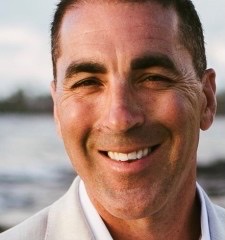
About the Author
Cassidy Cousens is a certified counselor, interventionist, and founder of Arago Integrative Recovery (AIR). He has more than 25 years of applied behavioral health practice, including two decades as an owner-operator of treatment programs across the continuum of care.
AIR was designed around the understanding that many people benefit from experiencing treatment outside traditional systems, and that one-on-one work, movement, and being in nature create conditions that help people recover, heal, and build the capacity for meaningful and lasting change. Read more about Cassidy’s background.